

Forget the myth of “no-code magic.” In 2026, web design is no longer about simply dragging and dropping elements onto a screen. True innovation comes from understanding how people think and interact.
If you want to master framer, you need more than AI shortcuts. You need to grasp psychology, build systems, and communicate ideas with absolute clarity. Tools are just the beginning.
This guide explores how framer has evolved beyond templates. We’ll break down core design principles, reveal AI’s real role, and show how to create cinematic workflows that add rhythm and depth to every interface.
Modern web design is a revolution in clarity-driven experiences. Ready to rethink your process? Let’s uncover the steps to mastering framer for the next era of digital creativity.
The New Era of Web Design: Beyond Templates
Modern web design is shifting away from cookie-cutter templates. Today, clarity, psychology, and systems thinking drive results. The myth of “no-code magic” is fading, replaced by a deeper, more strategic approach. Framer stands at the center of this revolution, reshaping how designers create, iterate, and scale digital experiences.
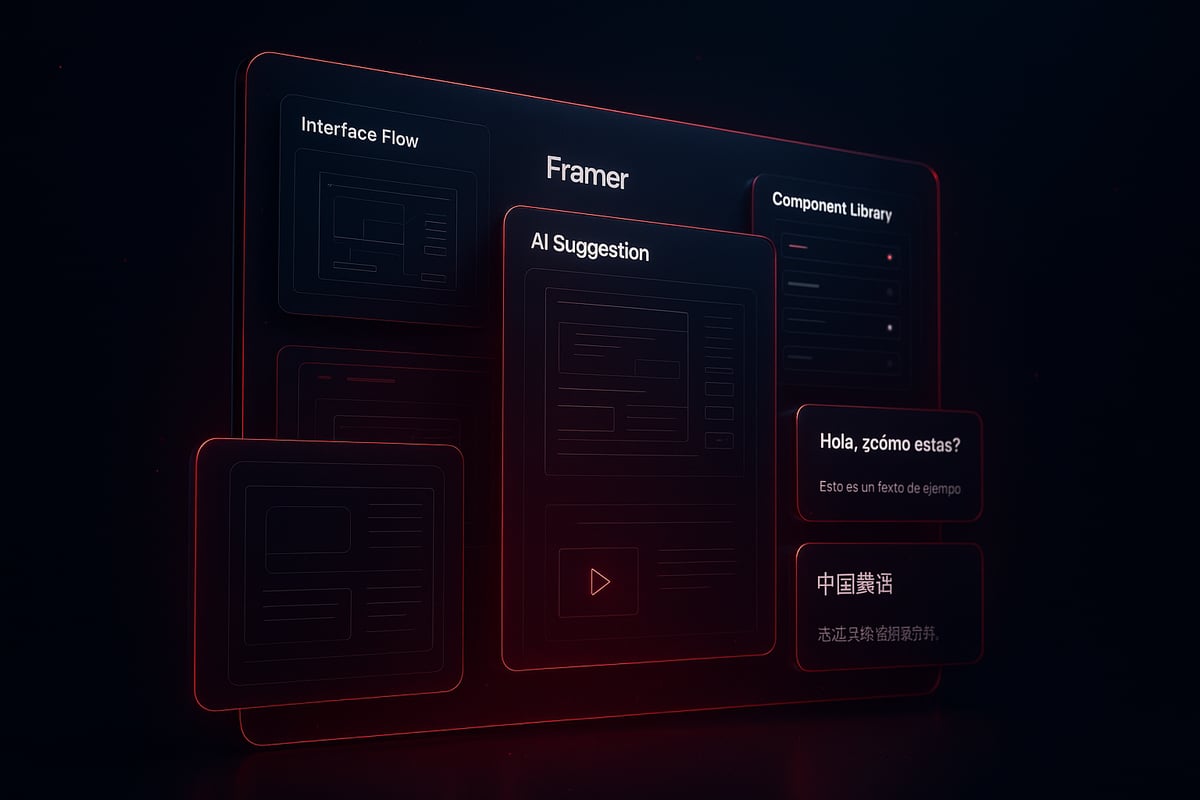
The Psychology of High-Performance Interfaces
Why do some websites feel instantly trustworthy while others overwhelm or confuse? In 2026, the answer lies in strategic clarity. High-performing interfaces balance minimalism and rhythm, reducing cognitive load so users can focus and act.
Compare a cluttered template site to a custom Framer build. The former bombards visitors with choices, while the latter guides the eye using purposeful hierarchy and narrative. According to TechRadar, focused layouts increase engagement by up to 35%. For more on emerging design trends, check out Web Design Trends 2026. The lesson is clear: design depth and story always outperform visual noise.
Why Framer? The Shift from Tools to Systems
Framer has evolved from a prototyping app into a comprehensive design system. Instead of thinking in static screens, Framer’s canvas encourages designers to build in flows—each element playing a role in the product story.
Let’s say you’re launching a SaaS tool. With Framer, you don’t just build a homepage. You craft a journey: landing, onboarding, conversion, and retention, all woven together. This design-first DNA sets Framer apart from generic site builders, making every interaction intentional.
The Role of AI in Modern Design Workflows
AI is a powerful co-pilot, not a creator. Within Framer, AI can draft layouts, generate multilingual copy, and adapt content for different audiences. Imagine launching a product page in multiple languages—Framer’s AI drafts the basics, but designers refine the tone and emotional resonance.
TechRadar highlights how Framer’s AI-powered copywriter learns your brand’s voice. Still, every site is the result of iterative, human-driven decisions. There’s no “one-click” solution—AI simply accelerates the creative process without replacing it.
The Cost of Superficial Design in 2026
Template-driven sites lack credibility and struggle to convert. Users recognize inauthenticity in seconds. That’s why advanced customization and real, systemized clarity justify Framer’s higher price point, as confirmed by TechRadar. Investing in depth and narrative pays off with higher trust and conversion rates.
Core Principles: Designing for Clarity, Depth, and Rhythm
Modern web design is full of noise, but clarity, depth, and rhythm cut through the chaos. Many believe that framer is simply a tool for quick visuals. In reality, it is a system for designing experiences that feel cinematic and intentional.

Clarity: The Foundation of Modern Web Experiences
Clarity is the silent engine behind every high-performing site. In framer, visual hierarchy guides the eye from headline to call-to-action, reducing cognitive friction at every breakpoint.
Start with a strong above-the-fold impact. Use framer’s layout tools to structure content so users instantly know where to look. For example, a SaaS landing page crafted in framer places the primary value prop front and center, while microcopy clarifies next steps.
AI can suggest initial copy, but clarity always comes from human refinement. Studio thinking means evaluating every element: does it help users act, or does it distract? In fast-paced digital spaces, clarity always beats visual noise.
Depth: Creating Meaningful Interactions
Depth is more than layers—it’s emotional engagement. With framer’s animation tools, you can add hover effects, scroll-based reveals, and microinteractions that invite users to explore.
Imagine a product pricing page: as users scroll, interactive tiers animate into view, each with subtle motion that signals interactivity. This approach builds trust and showcases expertise, rather than distracting with flashy effects.
According to Future of Web Design: 2026 Predictions, motion UI and micro-interactions are defining the next wave of web experiences. In framer, these features are not just for show—they create narrative depth and guide users through a story.
Rhythm: Orchestrating Flow and Engagement
Rhythm is the unseen conductor in web design. In framer, spacing, pacing, and content sequencing ensure users move naturally from section to section.
For example, a responsive grid keeps rhythm consistent across devices. Section transitions—like a smooth fade between features and testimonials—keep the experience fluid, not jarring.
Sites built with intentional rhythm enjoy longer session times and higher engagement. Framer’s tools let you map this journey, turning each interface into a well-paced story that users want to follow.
Systems Thinking: Designing Beyond Screens
Great design is scalable. Framer’s reusable components and style guides form a system, not just a collection of screens.
With a CMS and design tokens, you can scale consistent visuals and messaging. Studio thinking means every part of your framer project fits within a larger, flexible system—future-proofing your work and unlocking real creative freedom.
Framer in Action: A Cinematic Workflow for 2026
Designing with framer in 2026 is more than lining up screens. It’s a cinematic process—each step builds clarity, depth, and rhythm, guiding users on a purposeful journey. Let’s break down how a modern workflow unfolds, using framer as your creative engine.

Step 1: Framing the Problem—Discovery and Strategy
Every effective framer project starts with clarity—what is the real problem, and who are we solving it for? Teams map business goals, user needs, and the emotional narrative that connects them.
Using framer’s infinite canvas, you can rapidly sketch flows, visualize funnels, and outline user journeys. For example, mapping a startup’s path from landing page to sign-up exposes friction points and opportunities for depth.
This step ensures your design is purpose-built, not just assembled from parts. With framer, you’re not just decorating screens—you’re crafting a story.
Step 2: Laying Foundations—Wireframes and Hierarchy
Once the story is set, structure comes next. In framer, wireframes are more than grayscale sketches—they’re blueprints for conversion and clarity.
Leverage framer’s layout constraints to create adaptive, responsive structures. Each section must answer: why does this exist, and what action does it drive? For instance, a hero section in framer can guide the eye with focused hierarchy and minimal distraction.
Studio logic means every block has a reason, and nothing is left to guesswork. This discipline sets the stage for depth and rhythm.
Step 3: Bringing Depth—Motion, Microcopy, and Visuals
Depth is where emotion emerges. With framer’s animation tools, you can add subtle transitions, microinteractions, and layered visuals that engage and guide users.
Imagine a SaaS landing page: pricing tiers reveal on scroll, CTAs pulse gently, and microcopy adapts to user context. Framer’s animation panel makes these cinematic effects simple to orchestrate.
AI steps in as a creative assistant, drafting initial copy or suggesting visual tweaks, but the final polish—brand tone, clarity, and narrative—remains a human art.
Step 4: AI-Accelerated Iteration and Localization
Here, framer’s AI features shine. Need to test layouts or generate multilingual variants? AI can instantly localize content and adapt flows for global audiences.
Still, designers must review every AI output for nuance and emotional resonance. For a deeper look at quality evaluation, explore the AI-First Design Strategy Evaluation—it highlights how AI supports, but never replaces, the creative process in framer.
This iterative loop—AI generation, human refinement—keeps clarity and brand voice at the center.
Step 5: Systems and Launch—Scaling, Testing, and Handoff
The final act: scaling your framer project for launch. Build component libraries and document design systems, ensuring future updates are seamless.
Test every flow for rhythm, clarity, and performance before going live. With framer, systems thinking guarantees your work is ready for growth and adaptation.
Behind each cinematic launch is a framework—your own, or one like Embark Studio™—that balances creativity and order.
Advanced Framer Features: Unlocking Creative Freedom
What holds most designers back in 2026 is not a lack of tools, but the myth that creativity and speed are opposites. The real challenge is building flow and depth at scale—while staying true to your vision. Advanced framer features turn this challenge into an opportunity, blending system logic with cinematic craft.
AI-Powered Design Tools: What Really Works
The promise of AI in framer is not about one-click sites, but about amplifying your thinking. Framer’s AI page builder drafts layouts that adapt to your narrative—not the other way around. You can generate multilingual copy, then fine-tune for brand nuance. The style editor uses AI to suggest palettes and type combos, but you remain the final judge.
For instance, building a campaign microsite starts with an AI scaffold. You then layer in visual depth, microcopy, and interactive cues. Every AI-generated site in framer is editable—creativity never leaves your hands.
Curious about where these tools are headed? See how Web Design and Development Trends 2026 are shaping the next wave of digital experiences.
Responsive Design and Adaptive Layouts
Framer’s responsive grid and constraint systems are built for clarity and flexibility. Start mobile-first, and scale up—each breakpoint adapts automatically, keeping rhythm and hierarchy intact. Adjust layouts for tablet and desktop, and preview in real-time.
A real UI scenario: You launch a SaaS homepage, then tweak the hero section for larger screens using framer’s systemized breakpoints. This keeps the visual story consistent, no matter the device. Data shows that fast, responsive sites built in framer consistently outperform generic builders in both SEO and engagement.
CMS and Localization at Scale
Managing content across dozens—or hundreds—of pages is seamless with framer’s CMS. You can structure collections for blogs, products, or resources, then connect them to reusable components. Localization is AI-accelerated: translate copy, adapt visuals, and ensure consistency across languages.
Picture a global SaaS brand: with framer, you localize landing pages for five regions in minutes. The result is a unified system that scales trust and reach, while keeping brand clarity front and center.
Custom Animations and Interactivity
Framer’s animation timeline lets you choreograph motion with precision. Set up triggers for scroll-based reveals, hover states, or onboarding flows. Each animation is purposeful, adding depth without distraction.
Imagine a product demo: as users scroll, key features animate into view, guiding attention step by step. This cinematic approach builds emotional engagement and signals expertise. In framer, interactivity is not a gimmick—it’s a system for building trust.
Collaboration and Workflow Integrations
Design is a team sport, and framer’s real-time editing, version control, and integrations make collaboration seamless. Share projects, leave feedback, or sync with Figma, Slack, and analytics tools—all without breaking flow.
Teams ship faster when everyone works from a single source of truth. With framer, handoff is smooth, revisions are tracked, and every stakeholder stays aligned. This is how modern studios scale clarity and rhythm.
Real-World Scenarios: From Startup Launches to Global Brands
Modern web design in 2026 is not about one-size-fits-all solutions. The real difference comes from understanding how framer enables clarity, rhythm, and depth—no matter your stage of growth.
Startup Launch: Building Credibility and Conversion Fast
Launching a startup is about speed and trust. In 2026, founders need a site that not only looks sharp but also converts from day one. Using framer, teams can move from concept to launch in under 30 days.
- Start with a focused audit: What do users need to see first? What builds credibility fast?
- Use framer’s rapid prototyping to draft a funnel—from landing to sign-up—with clear CTAs and social proof.
- Layer in microinteractions and dynamic pricing to make the experience feel alive.
A recent case study showed startups leveraging framer saw faster launch cycles, helping them secure early revenue and attract investors. The logic is simple: clarity drives action, and framer delivers that clarity with systemized design tools.
Scaling for Growth: Systematizing Design for Teams
Growth brings complexity. As teams expand, consistency and efficiency become non-negotiable. Framer’s design system capabilities shine here.
- Build a library of reusable components—nav bars, cards, forms—so every new page inherits your brand’s DNA.
- Leverage CMS collections to scale from 5 to 50 pages without losing cohesion.
- Set up global style tokens for typography and colors, ensuring every update flows across the site.
A SaaS company recently scaled their framer site using these systems, maintaining visual rhythm and clarity even as their product offering multiplied. When design is systematized, teams spend less time reinventing and more time innovating.
Global Reach: Multilingual and Multi-Region Experiences
Reaching a global audience means more than translation. Framer’s AI localization tools help teams adapt both copy and visuals for each market.
- Use framer’s AI to generate multilingual variants of your landing page in seconds.
- Refine messaging to resonate emotionally—AI gives you the first draft, but human review ensures nuance and trust.
- Preview real UI for different regions, adjusting imagery and layout as needed.
Brands using framer to localize at scale report higher engagement and deeper trust across markets. Consistency in design and voice is key to building lasting global relationships.
Measuring Success: Analytics, Performance, and Iteration
Modern design is never static. With framer, teams can integrate analytics and performance monitoring directly into their workflow.
- Track conversions and UX insights in real time.
- Use staging environments to safely test updates before going live.
- Iterate quickly, always guided by data and user feedback.
This ongoing loop ensures every framer site stays sharp, responsive, and conversion-focused.
How Embark Studio™ Elevates Framer Projects
Embark Studio™ is an official framer expert partner, helping startups and brands launch conversion-optimized, scalable sites—fast.
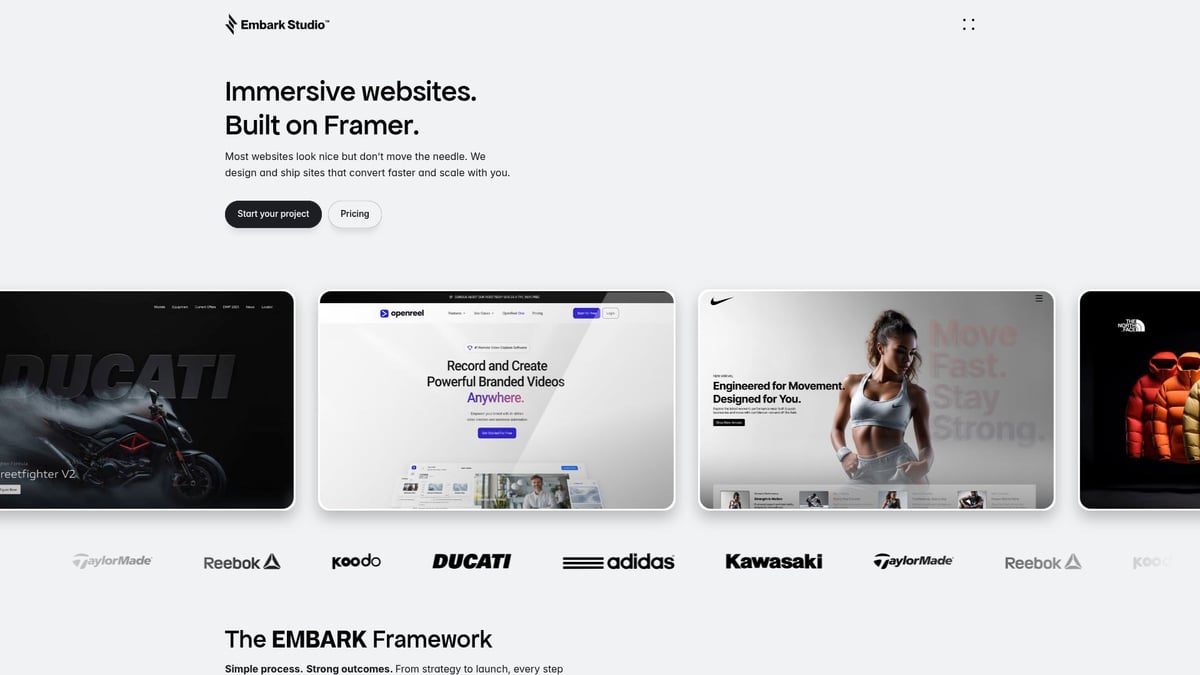
The studio’s async workflow, rapid audits, and launch sprints accelerate growth for every client. Proprietary frameworks ensure every framer project balances clarity, depth, and measurable ROI. Explore how studio systems can help you build smarter, not just faster.
Building Your Own Framer Design System for 2026
Building a design system in framer is not about collecting templates or colors. Instead, think of it as constructing a blueprint for clarity, rhythm, and growth. Many teams mistake a style guide for a true system. In reality, a design system is a living product that evolves as your needs shift.
Step 1: Define Your Brand’s Visual and Verbal Identity
The first step is to anchor your design system in your brand’s DNA. In framer, translate your logo, colors, and typography into design tokens. This creates a single source of truth for every project.
For example, use framer’s style system to set global fonts and color palettes. This ensures instant consistency across all screens.
AI can assist by generating initial typographic pairings or color schemes. However, human review is essential to align every choice with your brand’s voice.
Studio thinking: clarity comes first. Every token and guideline must serve a purpose, not just fill space.
Step 2: Create Reusable Components and Patterns
Next, build a toolkit of reusable components in framer. Start with essentials: nav bars, buttons, cards, and CTAs. Each element should be modular and purposeful.
Ask yourself, does this component solve a real user need? In framer, use variants and properties to make blocks flexible and scalable.
AI can quickly suggest layout options or generate first drafts of microcopy. But remember, final polish always comes from thoughtful iteration.
Studio logic: every component must contribute to clarity, rhythm, or depth. Avoid clutter and focus on systems, not just screens.
Step 3: Establish Adaptive Layouts and Responsive Rules
A modern framer design system must perform across devices. Use constraints and grids to ensure every layout adapts from mobile to desktop.
Preview your designs in framer’s responsive view. Adjust spacing and hierarchy for each breakpoint. Consistency is key, but so is optimizing for context.
AI can help by suggesting adjustments for different screen sizes. Still, it’s your judgment that ensures the rhythm and flow remain intact.
Studio approach: layout rules should make scaling effortless, not rigid. Flexibility and clarity coexist in the best systems.
Step 4: Integrate Content, CMS, and Localization
For scalability, connect your framer system to its built-in CMS. Structure collections for blogs, products, or team pages. This keeps content organized and future-proof.
Leverage framer’s AI-powered localization to adapt copy for global audiences. Always review translations for nuance and brand voice.
Consider this approach for your CMS:
| Collection | Fields | Example Entry |
|---|---|---|
| Blog Posts | Title, Author | "Designing for Depth" |
| Products | Name, Price | "Starter Plan, $19/mo" |
Studio mindset: systems make content updates seamless. The result is a site that grows with your business, not against it.
Step 5: Document, Test, and Iterate
Finally, document every part of your framer system. Create clear internal guides for onboarding team members quickly.
Regularly audit for clarity, rhythm, and depth as your system evolves. Test across devices and user scenarios. Iterate based on feedback.
Remember, a framer design system is never static. Growth comes from continuous improvement and a commitment to clarity.
Soft CTA: Level Up Your Design System
Still thinking about web design as a stack of screens? The real leap with framer in 2026 is mastering systems, not just layouts. Clarity, depth, and rhythm come from process, not from templates.
Consider the frameworks you use. Are they helping you create a site that feels alive and intentional? With framer, you can develop a toolkit that brings structure and meaning to every decision.
Explore ways to embed your brand’s identity into reusable patterns. Test how your design system adapts to changing needs, rather than just fitting content into boxes.
Want to push further? Advanced workflows and async collaboration can unlock new levels of scale and impact. The best framer projects are built on systems that evolve and grow with your team.
Curious how far your design system can go? Start with clarity, build with rhythm, and always aim for depth. If you’re seeking a proven approach, the Embark Studio™ frameworks are designed to help you master framer for the future.
If you’re excited about building web experiences that go beyond generic templates and truly resonate with users, now’s the perfect time to put ideas into action. We’ve explored how mastering Framer in 2026 is about clarity, rhythm, and scalable systems—not just slick tools. If you want to see how these principles can unlock growth for your startup, let’s talk. You’ll get tailored insights on how Embark Studio™ can help you launch quickly and scale with confidence. Ready to elevate your web presence and brand?
and let’s build something remarkable together.

Written by
James Rhodes
Founder and Lead AI Design Engineer at Embark Studio. Former Art Director at adidas and former Director of E-commerce and Digital Marketing at Roots. James directs every Embark engagement. About Embark
Get articles like this in your inbox
Practical design and growth insights for founders. No spam, unsubscribe anytime.


