Human-Centered AI Design Guide: Principles & Best Practices 2026

Hi, I'm James
I help startups turn confusing websites into conversion-ready ones in under 30 days.
100+ projects delivered
Worked with funded startups
Framer + UX specialist

7-Minute Website Fix Guide
Instant, high-impact fixes to improve clarity, trust, and conversions on your website.
View Our Services
Fast, high-quality Framer builds or Product Design to help startups ship and scale confidently.
Design Resources
Premium components, frameworks, and overrides for faster, better builds.
Master human centered ai design with proven principles, real world examples, and best practices to build ethical, transparent, and user empowering AI in 2026.
Forget the myth that artificial intelligence is here to replace designers. In reality, the future belongs to teams who use AI to amplify, not erase, human creativity.
By 2026, AI touches every digital product, yet most still struggle to deliver empathy, clarity, and seamless usability. The real breakthrough is human-centered ai design—systems crafted to serve, respect, and empower real people.
This guide reveals the psychology, process, and best practices behind building transparent, ethical, and truly human digital experiences. Dive in to discover actionable insights for shaping tomorrow’s most meaningful AI products.
The Evolution of Human-Centered AI Design
The journey to truly human-centered ai design did not happen overnight. Each era of technology brought new promises and new pitfalls. Today, as AI reshapes every industry, understanding this evolution is essential for anyone aiming to create digital products that are both innovative and genuinely human.

The Four Waves of Human-Technology Interaction
If you map out digital history, four distinct waves stand out. First, the 1940s mainframes, where only specialists interacted with machines. Next came the personal computing revolution in the 1980s, marked by graphical user interfaces that made technology accessible to millions.
The third wave arrived with the web, putting user experience at the center. Design thinking flourished, and products became intuitive. Now, we are deep in the fourth wave—human-centered ai design. Here, adaptive AI systems respond to emotion, intent, and context.
From 2020 to 2026, we hit an inflection point. AI advanced faster than people could adapt, creating a “Wisdom Gap.” Barclays’ research reveals innovation cycles often spark productivity spikes, but only when humans can catch up. AlphaGo’s 2016 win over a Go champion made the world realize AI’s cultural and psychological impact. This is the era where design must bridge machine speed and human wisdom.
Why Human-Centered AI Matters Now
Today, AI is everywhere, but trust lags behind. Users worry about bias, lack of transparency, and job loss. Even the smartest algorithms can miss the mark if they fail to connect with real human needs.
That’s why human-centered ai design is critical—it brings empathy and ethics into every product decision. By involving diverse users in the design process, companies consistently reduce bias and improve adoption rates. The stakes are high: AI-driven decisions now shape everything from healthcare to finance, making ethical design a non-negotiable standard.
If you want practical advice, explore Guidelines for Human-AI Interaction, which covers actionable best practices for building trust and transparency into AI-powered systems.
From User-Centered Design to Human-Centered AI
Classic user-centered design focused on usability—clear interfaces, fewer clicks, and intuitive flows. But human-centered ai design takes things further. Now, we must consider values, dignity, and the broader societal impact of our digital tools.
Instead of designing simple web forms, teams are building conversational AI that understands emotion and intent. This leap requires interdisciplinary collaboration. Designers, engineers, ethicists, and psychologists must work together to ensure AI feels less like a black box and more like a trusted partner.
The future of design is a system, not just a screen. By grounding every workflow in clarity and empathy, we create AI products that elevate—not erase—human creativity.
Core Principles of Human-Centered AI Design
Designing with purpose means putting people at the heart of every AI system. The secret to effective human-centered ai design is not in flashy features, but in how each decision supports real human needs, values, and agency. Let’s break down the seven core principles that shape the future of responsible, trustworthy AI.
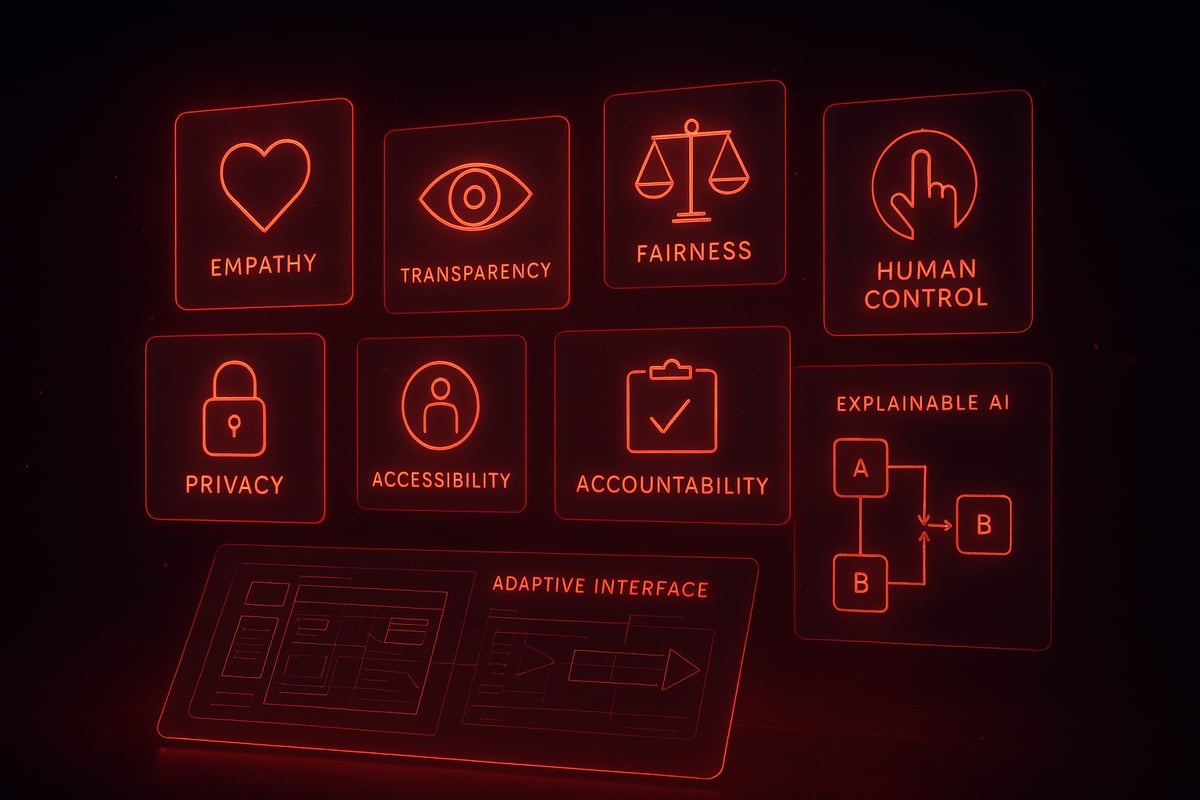
1. Empathy and Deep User Understanding
The first step in human-centered ai design is empathy. Great design starts by diving into the user’s world—mapping emotions, behaviors, and unseen barriers.
Consider adaptive learning platforms. They adjust lessons based on a student’s mood and pace, making learning more personal. Ethnographic research and behavioral analytics reveal these insights.
AI accelerates this process by surfacing patterns humans might miss. Yet, it’s the designer’s empathy that ensures the product resonates beyond the data.
2. Transparency and Explainability
Users need to trust how AI makes decisions. Human-centered ai design demands crystal-clear logic, not black boxes.
Take healthcare AI: patients deserve to know why a diagnosis was suggested. Using model interpretability and user-facing explanations, designers translate complex outputs into plain language.
For deeper insight, see the Principles of Human-Centered AI Design, which details how transparency builds user empowerment.
3. Fairness and Bias Mitigation
Human-centered ai design must confront bias head-on. Fairness is not optional when algorithms influence hiring, credit, or safety.
Example: Recruitment AI systems regularly audited for demographic fairness. Techniques like diverse training data and bias detection frameworks catch hidden patterns.
Studio thinking: treat fairness as a continuous commitment, not a checkbox.
4. Privacy and Data Ethics
Respect for privacy sits at the core of human-centered ai design. Users should control their data every step of the way.
Smart home assistants now offer granular privacy settings and clear opt-in choices. Privacy-by-design frameworks help teams anticipate risks early.
AI can enforce permissions, but only human designers can set boundaries that align with real values.
5. Accessibility and Inclusivity
Design for everyone, not just the average user. Human-centered ai design means products work across abilities, backgrounds, and contexts.
Voice assistants now support multiple languages and dialects. Accessibility audits and inclusive personas ensure nobody is left behind.
Inclusive design isn’t just ethical—it’s a strategic advantage, expanding reach and trust.
6. Accountability and Continuous Improvement
Who is responsible when AI goes wrong? Human-centered ai design requires clear ownership and feedback loops.
Financial AI tools now feature transparent error reporting and rapid escalation to human agents. Post-launch monitoring and iteration keep systems aligned with user needs.
Studios embed accountability into team culture, making improvement a habit.
7. Balance Between Automation and Human Control
AI should empower, not override, human agency. Human-centered ai design gives users the final say.
Driver-assist systems, for example, allow manual override and provide clear alerts. This balance builds trust, confidence, and safety.
The future belongs to systems that support human judgement, not ones that replace it.
Human-Centered AI Design Process: Step-by-Step Guide
Designing truly impactful AI products starts with process, not just technology. The secret? A repeatable, human-centered ai design workflow that puts people at the core of every decision. Here’s how leading teams structure their journey from insight to launch—where systems thinking, clarity, and empathy drive every step.

Step 1: Define Human-Centered Objectives
Every great human-centered ai design project starts by clarifying what matters to people. What do users value? Where do their needs and aspirations lie? Gather stakeholders, map values, and frame problems with specificity. In healthcare, for example, this means building AI to assist clinicians, not replace them. The psychology here is simple: clear objectives prevent feature creep and keep teams focused on outcomes that empower, not overwhelm.
Step 2: Conduct Contextual Research and User Discovery
Surface-level data is never enough in human-centered ai design. Dig into real-world behaviors and motivations through field studies and participatory design. Observe users in their natural context—like testing smart home AI in different households. This depth unlocks insights invisible from behind a screen, revealing pain points and workarounds that only emerge in authentic settings.
Step 3: Prototype with Human Feedback Loops
Move from theory to tangible experience fast, involving users at every stage. Rapid prototyping, scenario-based walkthroughs, and co-design sessions are core to human-centered ai design. For example, conversational AI products are refined through live user conversations, not just scripts. This approach is detailed in AI website design best practices, where real feedback shapes more empathetic, effective interfaces.
Step 4: Audit for Ethics, Bias, and Accessibility
No model is neutral. Human-centered ai design demands rigorous audits for fairness, clarity, and inclusion. Use bias detection frameworks, accessibility checklists, and ethical review boards to stress-test prototypes. Recruitment AI, for instance, should be evaluated for demographic parity and transparent candidate explanations. This step builds trust and prevents harm before launch.
Step 5: Implement Transparent, Explainable AI Models
Users trust what they understand. Prioritize interpretability when training models in human-centered ai design. Integrate XAI libraries and user-facing explanation panels—such as financial AI that visualizes decision factors for loan approvals. Clear, visual explanations turn black-box logic into actionable insight, aligning AI with user expectations and regulatory standards.
Step 6: Launch with Accountability Mechanisms
Ownership is non-negotiable. Assign clear responsibility for AI outcomes, monitor performance, and establish transparent error reporting. In human-centered ai design, customer service bots should escalate complex cases to humans, with robust analytics to trace decisions. Post-launch feedback closes the loop and signals ongoing commitment to user well-being.
Step 7: Continuously Monitor, Learn, and Iterate
The real world never stands still. After launch, human-centered ai design becomes a living process of monitoring, learning, and refining. Use A/B testing, sentiment analysis, and regular retraining to adapt to evolving user needs. For example, product recommendation engines should update as user preferences shift, always aiming for clarity and relevance.
Systems thinking powers each phase—connecting research, ethics, and iteration. This is the rhythm of modern design: clarity over noise, process over guesswork. For teams seeking to future-proof AI, Embark Studio™'s evolving frameworks offer a blueprint for building products that are ethical, transparent, and deeply human.
Real-World Examples and Case Studies
Real-world impact is the true test of human-centered ai design. Many assume AI solutions are cold or impersonal, but the best systems prove otherwise. Here are five examples that break the mold and show the psychology and process behind exceptional design.
Adaptive Learning Systems in Education
Imagine a student dashboard that senses when a learner is frustrated or engaged. Adaptive platforms use human-centered ai design to personalize content, pacing, and even encouragement. For instance, UI elements change color to signal progress, while AI suggests tailored exercises based on mood and performance. The result? Higher engagement and improved outcomes. Studies show personalized AI boosts test scores and retention. The secret is empathy—designers embed feedback loops and clear explanations, so students feel seen and supported.
Human-Centered AI in Healthcare
Healthcare demands trust, privacy, and emotional intelligence. Take mental health apps that use human-centered ai design to balance automation with empathy. Chatbots greet users by name, check in gently, and offer clear privacy options at every step. When sensitive issues arise, systems escalate to human therapists. This blend of AI and human care increases satisfaction and adherence. Data reveals that when patients understand how their data is used and feel respected, drop-off rates decrease and trust grows.
Driver-Assist and Smart Mobility Solutions
Driver-assist UIs illustrate the evolution of human-centered ai design. Instead of taking full control, these systems offer layered alerts, transparent explanations, and manual override buttons. Visual cues—like illuminated lane markings or tactile steering feedback—keep drivers informed. The psychology is clear: users want agency, not automation for its own sake. Accident rates drop and confidence improves when drivers understand how the AI supports, not replaces, their decisions.
AI in Customer Experience and Support
Customer support bots are often criticized for being robotic. However, emotion-aware systems built with human-centered ai design principles change the game. When a user’s tone signals frustration, the bot adapts its language or routes the chat to a human agent. UI elements highlight empathy, like “I’m here to help” banners and transparent escalation paths. This approach boosts first-contact resolution and customer satisfaction, proving that effective AI listens before it acts.
Inclusive Voice and Language AI
Designing for everyone means thinking beyond defaults. Multilingual voice assistants show how human-centered ai design expands access. Interfaces feature simple toggles for language and dialect, while onboarding flows ask about cultural preferences. These assistants don’t just translate—they adapt responses for local context. Adoption rates climb as users feel their identities respected. For a deeper dive into the attributes that drive these inclusive solutions, explore the Human-Centeredness Framework in AI.
Best Practices and Future-Proofing Human-Centered AI
Designing for the future of human-centered ai design means moving beyond isolated expertise. The real challenge is not technical capability, but how teams think, collaborate, and keep users at the center. Let’s unpack the studio mindset that keeps products ethical, usable, and ready for tomorrow.
Interdisciplinary Collaboration and Team Structure
The myth of the lone genius designer is outdated. The most resilient human-centered ai design projects thrive on interdisciplinary teams. Designers, engineers, ethicists, and psychologists work side by side, spotting blind spots and aligning on user values from day one.
At top studios, this means regular cross-functional sprints, shared vocabularies, and open critique sessions. Real-world example? A healthcare AI project where clinical experts, engineers, and UX researchers map risks and opportunities together, ensuring the product fits both workflow and ethics.
For a deeper dive into structuring these teams, check out the Product design and innovation guide, which outlines proven collaboration models for human-centered ai design.
Embedding Ethical Guardrails in Product Development
Ethics is not a checklist, it is a persistent dialogue. Future-proofing human-centered ai design requires ethical review at every milestone, not just at launch. Studios conduct regular “red team” sessions, challenging assumptions and surfacing unintended consequences early.
Each decision, from data sourcing to interface tone, is documented and reviewed. This creates a living record and makes future audits straightforward. In practice, this means bias audits, impact assessments, and transparent rationale are woven into the design process, not bolted on.
Designing for Trust, Agency, and Empowerment
Trust is earned when users feel in control. Human-centered ai design prioritizes transparency, giving users clear dashboards, manual overrides, and explanations for every automated action. Imagine a financial app where users can review, question, and adjust AI-driven recommendations with a single tap.
Empowerment goes further: interfaces adapt to user preferences and knowledge levels, never boxing them in. Studio thinking means clarity always trumps complexity—users shape the AI, not the other way around.
Leveraging AI for Creativity, Not Replacement
AI should accelerate creativity, not stifle it. In human-centered ai design, the system takes on the repetitive, leaving humans to ideate and decide. Think of an AI-powered design tool that suggests layouts, but hands over the final call to the designer.
This approach multiplies creative output while preserving the spark of human intuition. Studios use “studio thinking” as a guiding principle: systems support clarity, not noise, and the designer’s vision remains central.
Continuous Learning, Feedback, and Model Evolution
The best human-centered ai design projects never stand still. Continuous feedback loops drive improvement, with real user data guiding rapid iteration. Studios use structured A/B testing, sentiment analysis, and regular retraining to keep products relevant.
Practice | Tool/Method | Outcome |
|---|---|---|
Feedback Loops | In-app surveys | Faster issue detection |
Model Updates | Scheduled retrain | Higher accuracy |
Sentiment Track | Analytics dashboard | Improved engagement |
Teams that embrace this rhythm see higher long-term adoption and resilience. For a systems-level view, the Essential systems in design article breaks down how frameworks adapt as AI and user needs evolve.
How Product Design Studios Accelerate Human-Centered AI
Studios specializing in human-centered ai design, like Embark Studio™, do more than ship features. They embed ethical guardrails, foster rapid iteration, and drive clarity across every workflow.

By leveraging collaborative, AI-assisted methods, these studios support creative decision-making while maintaining transparency and inclusivity. Their work with startups demonstrates how outcome-driven partnerships can future-proof your AI strategy—ensuring every digital experience is designed for real human impact.
The Road Ahead: Trends and Challenges in Human-Centered AI Design
The future of human-centered ai design is both thrilling and complex. As digital products become more intelligent, designers face new psychological and ethical puzzles. The next frontier is not more features, but designing systems that adapt to people, not the other way around.
Emerging Technologies and Design Paradigms
AI is evolving fast. Designers now work with generative models, multimodal UIs, and context-aware systems. The shift from screens to conversational and ambient experiences challenges designers to rethink every interaction. For instance, holographic panels and voice-first interfaces demand new ways to visualize feedback, trust, and control.
Real-world UI scenarios, like adaptive dashboards, illustrate how systems must anticipate intent. In 2025 and beyond, UI design concepts for 2025 highlight the need for clarity and rhythm in every touchpoint. AI accelerates these workflows, but clarity always wins over complexity.
Global Adoption and Societal Impact
Human-centered ai design is essential for equitable technology. AI products must respect local norms, languages, and regulatory rules. A chatbot that supports dialects or a financial tool adapted for regional laws exemplifies this shift.
Teams now embed diverse perspectives early, ensuring solutions are both inclusive and ethical. Insights from Human-Centric AI Solutions for 2025 show that community engagement and inclusive design increase adoption and trust worldwide. The challenge is balancing rapid innovation with social responsibility.
Collaboration Between Humans and AI
The best systems blend human intuition with machine efficiency. Decision-support tools in healthcare, for example, combine a doctor's judgment with AI-driven pattern recognition. This partnership enhances outcomes, rather than replacing human expertise.
AI supports workflows by surfacing insights, streamlining tasks, and leaving final decisions to people. Studio thinking focuses on building systems that empower, not overpower, users. In human-centered ai design, collaboration is always the goal.
Emphasis on Explainable and Trustworthy AI
Transparency is now a requirement, not a luxury. Regulations like the EU’s AI Act demand clear explanations for automated decisions. Users expect to see not just what AI decides, but why.
Designers are reimagining interfaces to communicate logic simply—think visual “why” panels or error breakdowns. Explainability builds trust, a core pillar of human-centered ai design. The studio mindset: always show your work, and make it accessible.
Continuous Evolution of Human-Centered Design Frameworks
Human-centered ai design frameworks must evolve as technology and society change. Teams should regularly update toolkits, methods, and best practices. For example, integrating accessibility checks and ethical audits into every sprint keeps products future-ready.
Studios that prioritize systems over screens ensure their design approach remains adaptable. Stay tuned—our Embark Studio™ toolkit will continue to grow, supporting every team committed to clarity and human impact.
As we’ve explored, building truly human-centered AI means designing with empathy, clarity, and real-world impact in mind—not just following trends or chasing features. If you’re ready to apply these principles and create digital experiences that scale with your vision, let’s connect. At Embark Studio™, we work right alongside founders and product teams, shaping AI-powered products that drive growth, trust, and conversion every step of the way. Curious how a collaborative, outcome-driven partnership could elevate your next project? Book a Free Discovery Call and let’s talk about the future you want to build.

Blog / Newsletter