Product Design, Design Guide: Essential Insights for 2025

Hi, I'm James
I help startups turn confusing websites into conversion-ready ones in under 30 days.
100+ projects delivered
Worked with funded startups
Framer + UX specialist
7-Minute Website Fix Guide
Instant, high-impact fixes to improve clarity, trust, and conversions on your website.
View Our Services
Fast, high-quality Framer builds or Product Design to help startups ship and scale confidently.
Design Resources
Premium components, frameworks, and overrides for faster, better builds.
In 2025, product design is the engine of innovation—and the bar for seamless, user-first experiences has never been higher. This guide gives startups and product teams a modern playbook: clear process, emerging trends, and practical tactics to ship products that delight users and drive growth.
In 2025, product design, design stands at the center of innovation, influencing how we live, work, and interact with technology. The expectations for seamless, user-focused experiences are higher than ever, making mastery of this discipline essential for success.
This guide is crafted to help startups, designers, and product leaders navigate the rapidly evolving landscape. You'll discover actionable insights, emerging trends, and practical steps for building products that delight users and drive measurable business growth.
Get ready to explore the scope of product design design, learn the modern process, overcome challenges, and adopt winning strategies that future-proof your approach.
Defining Product Design in 2025
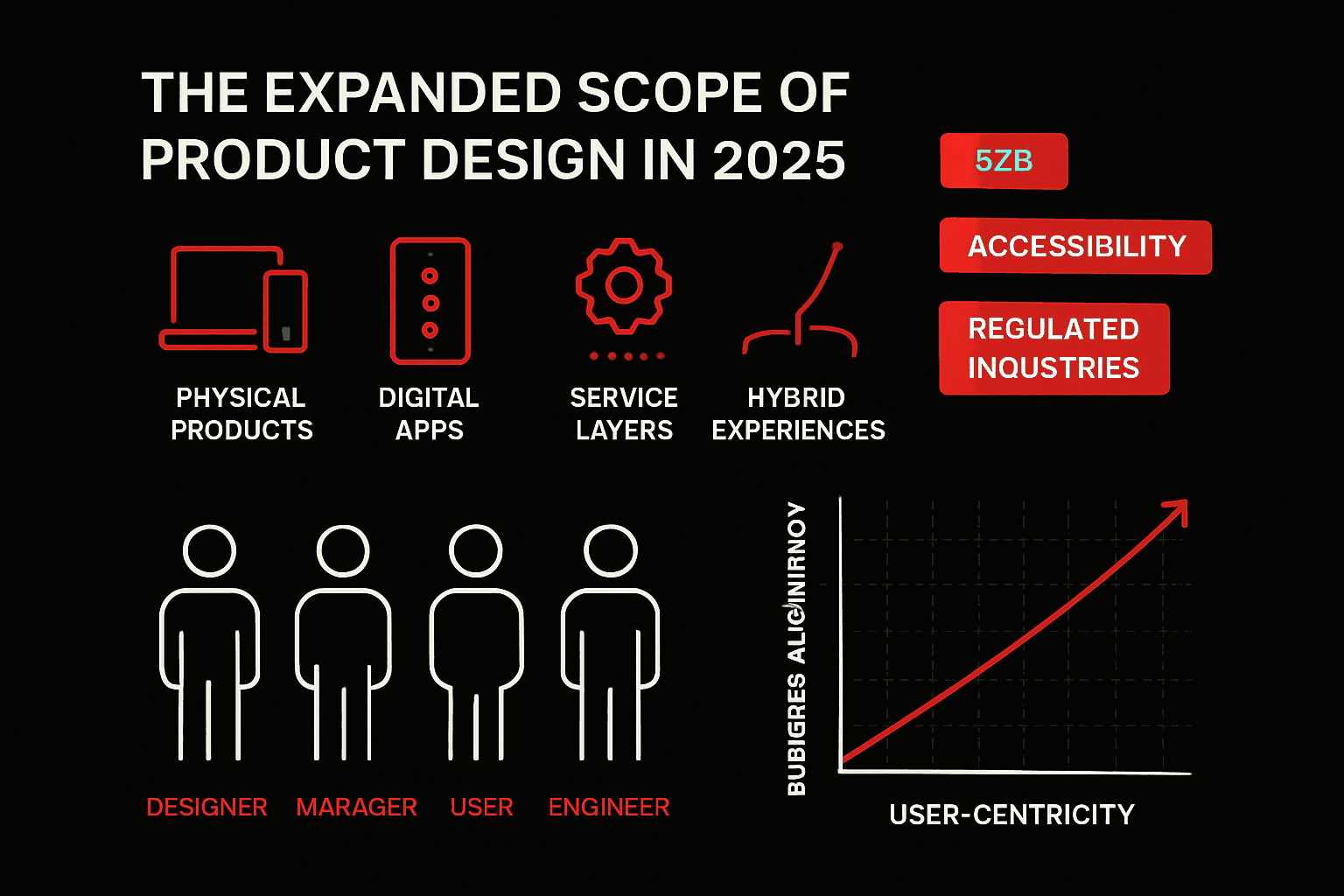
Product design design in 2025 is experiencing rapid transformation. Today, its scope reaches far beyond simple aesthetics or functionality. It now covers everything from physical devices to digital interfaces and the hybrid experiences that connect them.
The Evolving Scope of Product Design
The landscape of product design design now embraces physical, digital, and hybrid products. This includes not only hardware but also software, interfaces, and the experiences that tie them together. Modern product design design requires thinking holistically, considering how services, user flows, and tangible elements interact.
For example, a SaaS platform today often integrates cloud software, connected devices, and service layers to provide a complete solution. The shift from traditional industrial design to integrated user and business experiences is what defines product design design in 2025.
Physical products: wearables, electronics
Digital products: apps, SaaS, platforms
Service and experience design: customer journeys, support systems
Key Roles and Stakeholders
Product design design is no longer a solo endeavor. Designers work hand-in-hand with UX/UI specialists, engineers, marketers, and product managers. While product designers focus on vision and holistic outcomes, product managers steer execution and delivery.
Collaboration extends to researchers and actual users, ensuring solutions stay relevant and impactful. At leading tech companies, teams often co-design with both end-users and business strategists to bridge gaps between needs and business goals.
Role | Focus |
|---|---|
Product Designer | Vision, holistic experience |
Product Manager | Execution, roadmaps |
UX/UI Designer | Usability, interfaces |
Engineer | Technical feasibility |
Business Alignment and User-Centricity
Successful product design design hinges on balancing user needs with business priorities. Teams must weigh budgets, timelines, and ROI against delivering delightful user experiences. User research, feedback loops, and constant iteration are now non-negotiable practices.
According to the McKinsey Design Index 2025, companies strong in product design design outperform industry averages in both revenue and shareholder value. Embedding research and business alignment into every phase ensures products not only work for users, but also drive measurable business growth.
Types of Products and Design Contexts
Today’s product design design touches a wide variety of products and industries. From physical gadgets to digital tools, from service design to orchestrated experiences, designers must adapt to context.
B2B vs. B2C: Different user motivations and buying cycles
Regulated industries: Compliance and safety
Accessibility: Designing for all users, including those with disabilities
Consider digital health products: they must meet strict regulatory standards while remaining intuitive and user-friendly. Understanding the environment and audience is essential for effective product design design.
The Modern Product Design Process: Step-by-Step
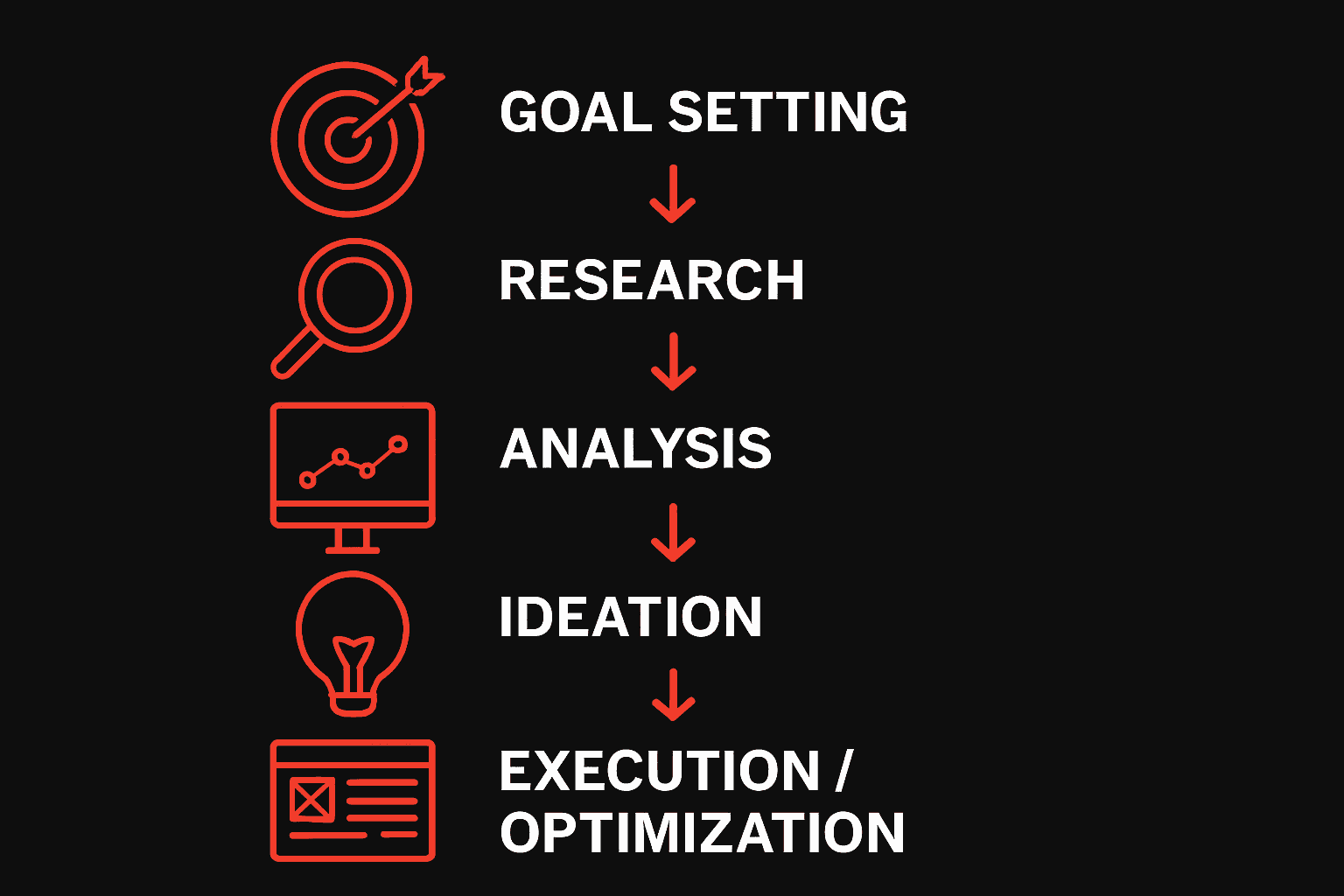
Embarking on a successful product design design journey in 2025 means following a clear, iterative process. Each step is essential for building products that stand out and deliver value. Let's walk through the modern approach, from initial goal setting to post-launch optimization.
Step 1: Setting Goals and Defining Success
Every product design design project begins with crystal-clear objectives. Teams use frameworks like SMART goals to define targets that are Specific, Measurable, Achievable, Relevant, and Time-bound.
Aligning product vision with the company mission is crucial. Startups often set OKRs (Objectives and Key Results) to track progress and measure impact. For example, a SaaS company might aim to increase user adoption by 30% within six months.
Use SMART goals for clarity.
Set OKRs for measurable outcomes.
Connect goals to business and user needs.
By rooting the product design design process in well-defined goals, teams ensure every decision drives toward meaningful results.
Step 2: Research and Discovery
User-focused research sits at the core of effective product design design. Teams conduct interviews, surveys, and diary studies to gather insights directly from users. Competitor analysis and market trends provide additional context.
Both quantitative data (like analytics dashboards) and qualitative data (such as user stories) shape the design direction. Empathy-driven research helps teams uncover true pain points and opportunities.
Leading companies like Figma and Qualtrics prioritize deep research at the outset of their product design design projects, ensuring solutions are grounded in real user needs.
Step 3: Analysis and Problem Framing
After collecting data, teams transition to analysis in the product design design process. Synthesizing findings into personas and journey maps helps visualize user experiences and challenges.
SWOT analysis (Strengths, Weaknesses, Opportunities, Threats) is a popular tool for mapping market fit and identifying competitive advantages. Teams use these insights to frame the core problems worth solving.
By clarifying user pain points and business opportunities, the product design design team sets a strong foundation for ideation and strategic planning.
Step 4: Ideation, Strategy, and Planning
This phase is where creativity meets strategy in product design design. Teams brainstorm solutions, sketch prototypes, and prioritize features based on user and business value.
Action plans and roadmaps are developed to align efforts across design, engineering, and marketing. Cross-functional workshops are common, ensuring the product design design process remains collaborative and focused.
Brainstorm ideas quickly.
Prototype early and often.
Align plans with business goals.
A strategic approach to ideation turns insights into actionable plans that guide the next stages.
Step 5: Design Execution, Testing, and Iteration
The real magic of product design design unfolds during execution and testing. Designers use tools like Figma and Framer to create wireframes, interactive prototypes, and high-fidelity visuals.
Usability testing and rapid iteration are essential. Teams gather feedback, run A/B tests, and refine designs for optimal user experience. For a real-world example, see the OpenReel product and web design case study, which showcases how modern teams use continuous feedback to drive design excellence.
A cycle of testing and improvement ensures the product design design meets user expectations and business objectives.
Step 6: Launch and Post-Launch Optimization
Launching a product is just the beginning in the product design design cycle. Teams coordinate across functions to deliver a seamless rollout. Post-launch, they actively collect user feedback and analyze product analytics.
Continuous updates and enhancements are based on real-world usage and evolving needs. This iterative approach keeps the product design design relevant, competitive, and user-centric.
Monitor user feedback.
Analyze key metrics.
Optimize with regular updates.
By embracing ongoing optimization, teams ensure their product design design delivers lasting value in a dynamic market.
Overcoming Key Product Design Challenges
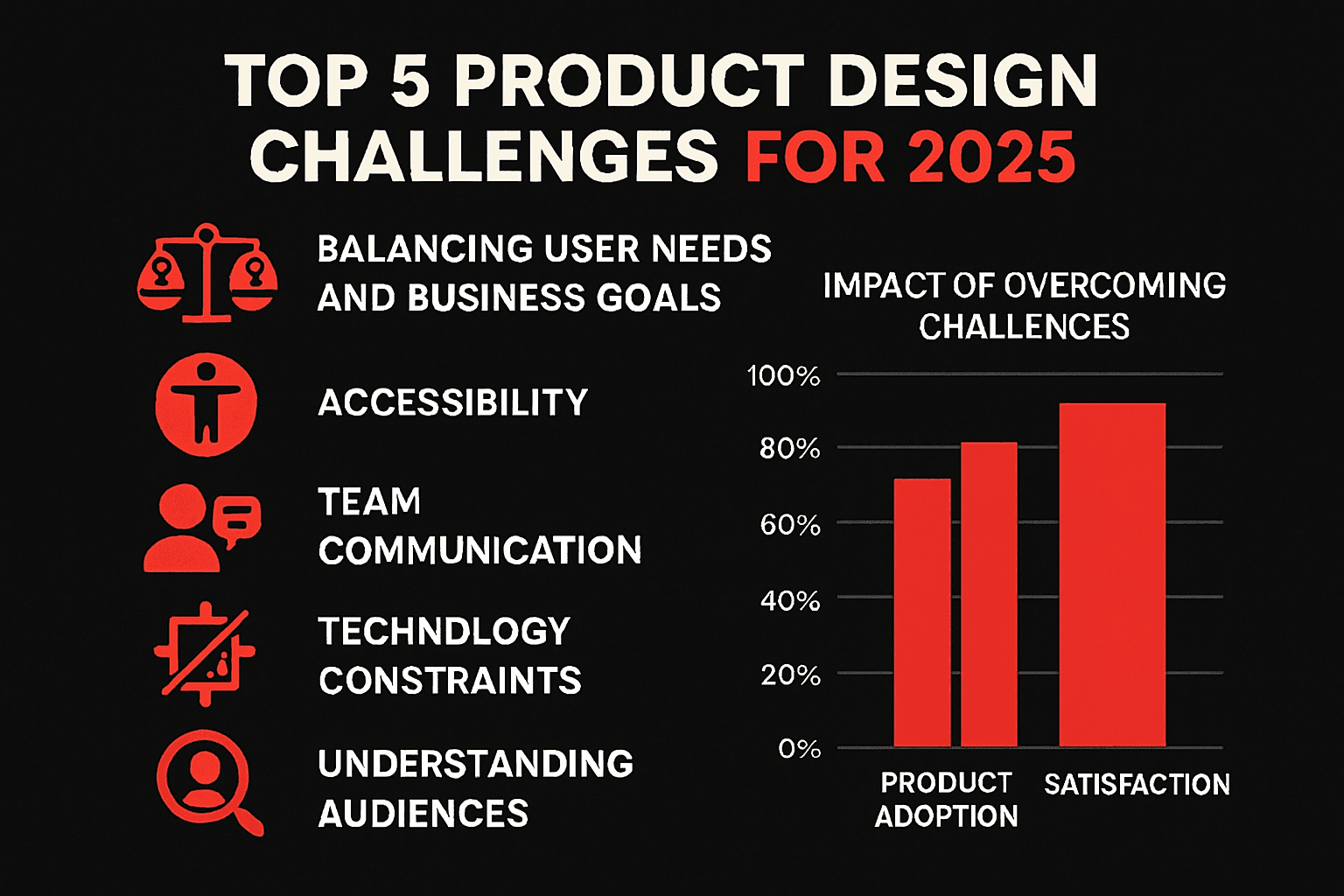
In the fast-paced world of product design design, teams face a unique set of challenges that can make or break the success of a product. Navigating these hurdles requires not just creativity, but a strategic, user-focused mindset. Let’s explore the most critical obstacles and how high-performing teams overcome them.
Balancing User Needs and Business Goals
One of the toughest aspects of product design design is striking the right balance between what users want and what the business needs to achieve. Often, user delight and profitability can seem at odds.
Teams use tools like prioritization matrices and MVP (Minimum Viable Product) frameworks to make informed trade-offs. For example:
Prioritization matrices help weigh potential features against business value.
MVPs allow teams to validate core concepts quickly.
OKRs (Objectives and Key Results) align everyone on outcomes.
By using these approaches, product design design teams ensure that business constraints don’t overshadow genuine user needs, leading to products that both perform and delight.
Designing for Accessibility and Inclusion
Accessibility is no longer an afterthought in product design design. Integrating accessibility best practices from the start is essential for reaching the broadest possible audience and ensuring legal compliance.
Teams embed standards like WCAG into their workflows and involve users with disabilities throughout research and testing. For instance:
Building in screen reader support
Optimizing color contrast
Testing with assistive technologies
Investing in these areas isn’t just ethical—it also broadens market reach. For more on responsive and accessible design, see The imperative of responsive web design.
Ensuring Effective Team Communication
Clear communication is the backbone of successful product design design. With cross-functional teams often spread across locations, maintaining alignment can be challenging.
Effective teams use:
Centralized documentation to track decisions and feedback
Design reviews for structured critique
Collaborative tools like Slack and FigJam
For example, BT utilizes FigJam to streamline design discussions and keep everyone on the same page. These rituals help maintain momentum and prevent costly missteps.
Navigating Technological and Resource Constraints
Product design design often happens under tight deadlines, limited budgets, or with evolving tech stacks. Teams must be resourceful and adaptable.
Key strategies include:
Choosing tools that support parallel workflows and rapid iteration
Setting realistic timelines based on available resources
Leveraging cloud platforms like Figma for real-time collaboration
Gojek’s team, for instance, uses Figma to meet aggressive deadlines without sacrificing quality. By embracing flexible platforms, product design design teams can deliver value even under constraints.
Understanding and Adapting to Target Audiences
Continuous alignment with user needs is at the heart of effective product design design. Markets shift, and user expectations evolve, so ongoing research is crucial.
Teams rely on:
Personas to represent key user segments
Customer journey maps to visualize experiences
Regular feedback loops to catch emerging trends
Statistics show that products tailored to their target audiences see higher adoption and satisfaction rates. Embedding this mindset into product design design ensures solutions remain relevant and impactful.
Product Design vs. UX Design: Key Differences and Synergies
Understanding the difference between product design design and UX design is crucial for building successful products in 2025. While both roles work closely together, their focus, skills, and impact on business outcomes are unique. Let’s explore how these disciplines overlap, collaborate, and drive innovation.
Distinct Focus Areas
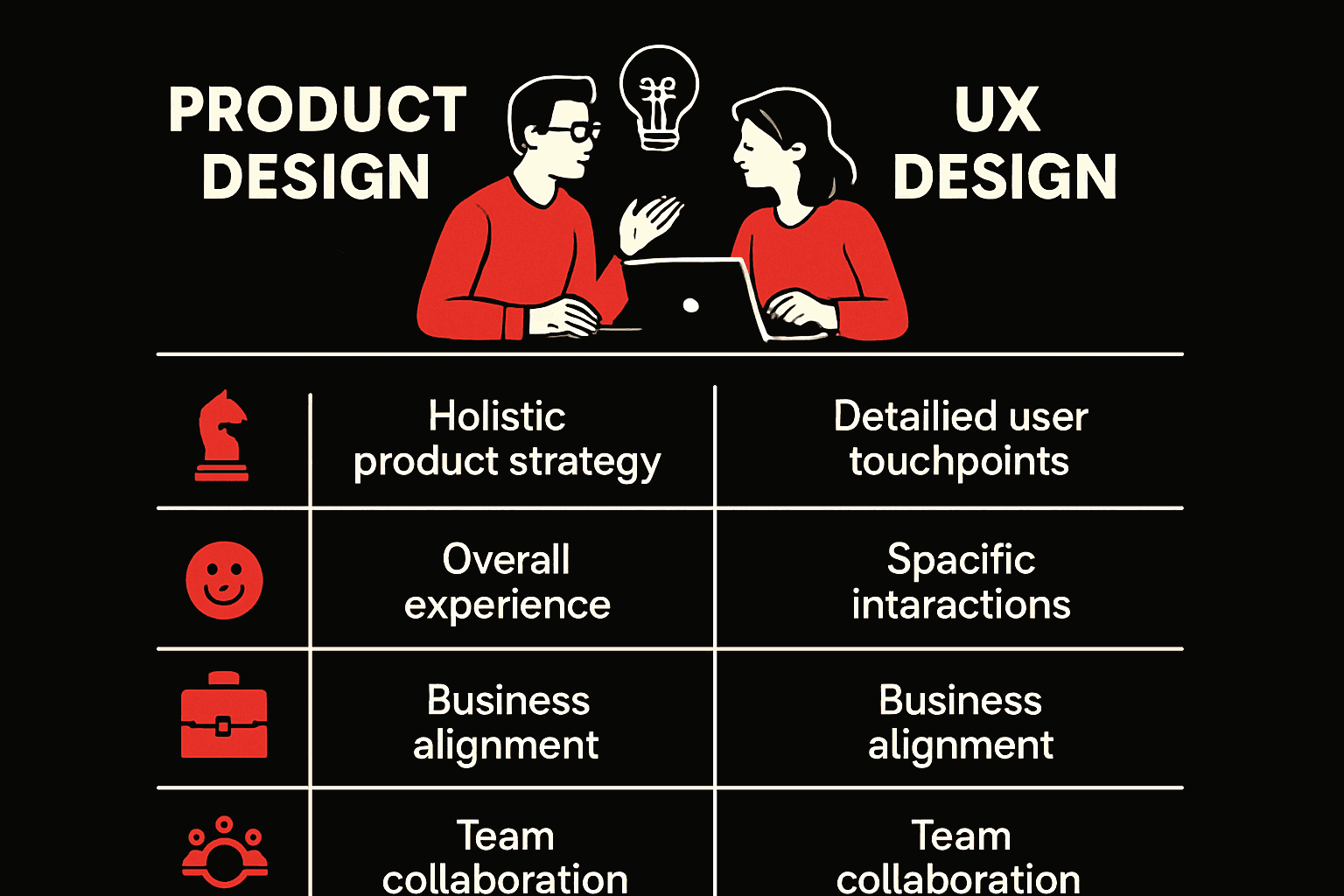
Product design design takes a holistic approach, blending business strategy, aesthetics, user needs, and market fit. In contrast, UX design zeroes in on optimizing every user interaction and ensuring seamless usability.
Aspect | Product Design Design | UX Design |
|---|---|---|
Main Focus | Strategy, vision, business fit | Usability, user satisfaction |
Scope | End-to-end product | User touchpoints |
Impact | Market success, brand | Experience quality |
For example, a product designer shapes the overall vision and roadmap, while a UX designer fine-tunes navigation and interface details. Both roles are essential, but their perspectives differ.
Overlapping Skills and Collaboration
Despite their unique strengths, product design design and UX design share several core skills. Both rely on empathy, research, prototyping, and iterative testing.
Conducting user interviews and usability studies
Building wireframes and prototypes
Engaging in feedback-driven iteration
Collaboration is key. Product designers and UX designers often co-create features, aligning user experience with broader business goals. Their teamwork ensures products are not only functional but also delightful and market-ready.
Theoretical and Practical Backgrounds
Professionals in product design design typically come from visual or product backgrounds, while UX designers often have expertise in psychology, human-computer interaction, or cognitive science.
Product designers might lead end-to-end concept development, bringing together strategy, branding, and execution. UX designers, meanwhile, specialize in usability testing and refining specific user flows.
This blend of backgrounds enriches the design process, making teams more versatile and adaptive to changing needs.
Business and Brand Alignment
A strong product design design practice ensures every product aligns with the company’s brand identity and market positioning. Product designers oversee consistency and differentiation, helping the business stand out.
UX designers focus on creating intuitive, accessible experiences across platforms. For SaaS companies, this means integrating branding at every interaction, from onboarding to daily use.
Both roles contribute to the product’s success, but product designers are responsible for the bigger business picture, while UX designers perfect the details.
Real-World Implications
When product design design and UX design work in synergy, companies consistently outperform their competitors in user satisfaction and business results. According to the McKinsey Design Index and industry studies, organizations that prioritize this collaboration see higher revenue and shareholder value.
For more on emerging trends shaping this partnership, see Product Design Trends 2025.
Building a culture where both disciplines collaborate leads to innovative products, happier users, and measurable business impact.
Future Trends and Essential Insights for Product Design in 2025
The world of product design design is shifting rapidly as we approach 2025. Today’s landscape is defined by continuous evolution, emerging technologies, and an unwavering focus on user needs. Let’s explore the trends, tools, and insights shaping the future of product design design, so you can stay ahead of the curve and create products that truly resonate.
Embracing Continuous Design and Iteration
Gone are the days of rigid, linear processes. In 2025, product design design is all about ongoing cycles. Agile sprints, rapid prototyping, and real-time feedback drive success. Teams launch, learn, and iterate quickly, making constant improvements based on user insights.
SaaS companies, for example, now push updates weekly or even daily. Designers gather data, tweak features, and respond to user behavior in real time. This mindset of perpetual evolution ensures products remain relevant, engaging, and competitive.
Continuous design and iteration empower teams to deliver value faster and adapt seamlessly to shifting market demands.
AI and Automation in Design Workflows
Artificial intelligence is transforming product design design at every stage. AI-powered tools speed up user research, generate design variations, and automate repetitive tasks. This shift allows designers to focus on high-impact, strategic work.
For deeper insight, check out AI in Product Design, which explores how AI accelerates design workflows and personalizes user experiences. From automated usability testing to predictive analytics, AI is now a core component in leading design teams.
Expect to see more AI-driven prototyping, content generation, and user data analysis, all contributing to smarter, faster product design design.
Design Systems and Component Libraries
Consistency and speed are non-negotiable in modern product design design. Design systems and shared component libraries have become essential. These frameworks enable teams to maintain brand coherence, reduce errors, and accelerate development across platforms.
Tech giants rely on robust UI libraries to standardize design language company-wide. Startups benefit too, as reusable components free up time for innovation. The result? Products that feel cohesive, user-friendly, and scalable.
Adopting design systems is now a baseline expectation for any high-performing product design design team.
Accessibility and Ethical Design as Standard
Accessibility and ethics are at the heart of product design design in 2025. These principles are no longer optional—they’re built into every workflow. Designers integrate WCAG standards, involve users with disabilities, and prioritize inclusive practices from the outset.
For actionable guidance, see Inclusive Design Practices, which highlights real-world accessibility strategies. Ethical considerations, such as privacy and transparency, are equally critical.
By embedding these values, product design design teams reach wider audiences, build trust, and reduce risk.
Remote and Global Collaboration
The rise of distributed teams is reshaping product design design. Cloud-based tools like Figma, Miro, and Slack enable real-time and asynchronous collaboration across continents. Teams now work seamlessly, regardless of location or time zone.
Remote-first workflows promote diversity and unlock global talent. According to recent studies, remote teams iterate faster and deliver more innovative solutions. This trend is only accelerating as companies seek greater flexibility and resilience in their product design design processes.
Data-Driven and Outcome-Oriented Design
Data is the new compass for product design design. Teams leverage analytics, A/B testing, and user feedback to guide every decision. Outcome-oriented design means focusing on measurable business results, not just features or aesthetics.
Here’s a quick comparison of common metrics:
Metric | What It Measures | Why It Matters |
|---|---|---|
Conversion | User action rate | Drives revenue |
Retention | Repeat usage | Indicates satisfaction |
NPS | User loyalty | Predicts growth |
By tracking these metrics, product design design teams ensure their work delivers tangible value.
Sustainability and Social Impact
Sustainability is now central to product design design. Brands are rethinking materials, packaging, and digital experiences to minimize environmental impact. Social responsibility is equally important, with teams designing for inclusivity, accessibility, and ethical use.
A recent Qualtrics study found that 73% of consumers prefer brands with strong sustainability commitments. As a result, product design design leaders are prioritizing eco-friendly solutions and positive social outcomes.
Case Studies and Industry Benchmarks
Industry leaders like Figma, Gojek, and BT set the standard for product design design excellence. These companies embrace continuous iteration, user-centricity, and powerful design systems. The McKinsey Design Index consistently shows that firms with mature design practices outperform peers in revenue and shareholder returns.
By learning from these benchmarks and real-world launches, product design design teams can adopt proven strategies and drive lasting success.
Actionable Strategies for High-Performance Product Design Teams
Achieving excellence in product design design requires more than creative talent—it demands strategic action, seamless teamwork, and a relentless focus on user and business outcomes. In 2025, high-performance teams thrive by leveraging proven strategies, embracing modern tools, and fostering a culture of continuous improvement. Let’s break down the core approaches essential for any product design design team aiming to outperform the competition.
Building Cross-Functional Design Teams
Successful product design design starts with assembling teams that blend diverse expertise. High-performing groups bring together designers, engineers, product managers, and marketers to collaborate from ideation to launch.
Weekly design sprints encourage shared ownership and rapid progress.
Open communication ensures that everyone aligns on goals and priorities.
Clear role definitions prevent bottlenecks and foster accountability.
By breaking down silos, product design design teams unlock creativity and deliver solutions that are both innovative and practical. Cross-functional approaches also help teams spot issues early, reducing costly rework later in the process.
Investing in Research and User Testing
Robust user research is the backbone of any effective product design design process. Leading teams allocate time and resources for user interviews, surveys, and usability tests throughout the product lifecycle.
Continuous feedback loops drive empathy and reduce guesswork.
Remote usability testing tools provide scalable, real-world insights.
Data from interviews and analytics inform smarter design decisions.
Understanding how color, layout, and interaction patterns affect users is vital. For instance, exploring the psychology of color in web design can reveal how subtle design choices impact perception and engagement, helping teams create more intuitive experiences.
Leveraging Modern Design Tools and Systems
Modern product design design depends on agile, cloud-based platforms that empower teams to work together efficiently. Tools like Figma and Framer allow for real-time collaboration, seamless handoffs, and rapid prototyping.
Shared design systems keep branding and UI elements consistent.
Component libraries speed up iteration and reduce duplication.
Integrated feedback tools streamline review cycles.
Startups and established companies alike benefit from these technologies, enabling them to launch products faster and respond quickly to market feedback.
Prioritizing Accessibility and Diversity
Inclusive product design design is no longer optional. High-performance teams embed accessibility checks and inclusive practices into every stage of development.
Accessibility audits ensure products meet WCAG standards.
Involving users with diverse backgrounds leads to richer insights.
Regular training keeps teams up to date on inclusive design trends.
Making accessibility a core value not only expands market reach but also mitigates legal risks. Teams that prioritize diversity in product design design are better equipped to serve a broader user base.
Measuring and Optimizing for Business Impact
To maximize value, product design design teams set clear KPIs aligned with business objectives such as conversion, retention, and ROI. Data-driven decision-making ensures that design efforts contribute directly to growth.
Metric | Why It Matters | How to Track |
|---|---|---|
Conversion | Measures user action | Analytics, A/B testing |
Retention | Indicates ongoing engagement | Cohort analysis, NPS |
ROI | Assesses financial impact | Revenue vs. design spend |
Regularly reviewing dashboards and user feedback helps teams iterate effectively and prove the business case for strong product design design.
Fostering a Culture of Innovation and Learning
High-performing product design design teams don’t just execute—they evolve. They embrace experimentation, share knowledge openly, and invest in professional growth.
Design retrospectives surface lessons and spark new ideas.
Workshops and lunch-and-learns build collective expertise.
Encouraging risk-taking leads to breakthrough solutions.
A learning mindset keeps teams adaptable, ensuring they stay ahead of industry trends and continuously raise the bar for product design design excellence.
If you’re ready to put these 2025 product design insights into action and want a partner who truly gets how startups work, why not take the next step? At EMBK/STUDIO, we specialize in helping fast-moving teams like yours turn strategy into standout products, using streamlined processes, the latest tools, and a genuine focus on what drives growth. Let’s chat about your goals, your challenges, and how we can help you build something remarkable—together. \
Curious what’s possible for your brand? Book a Free Discovery Call and let’s explore your next big move.

Blog / Newsletter